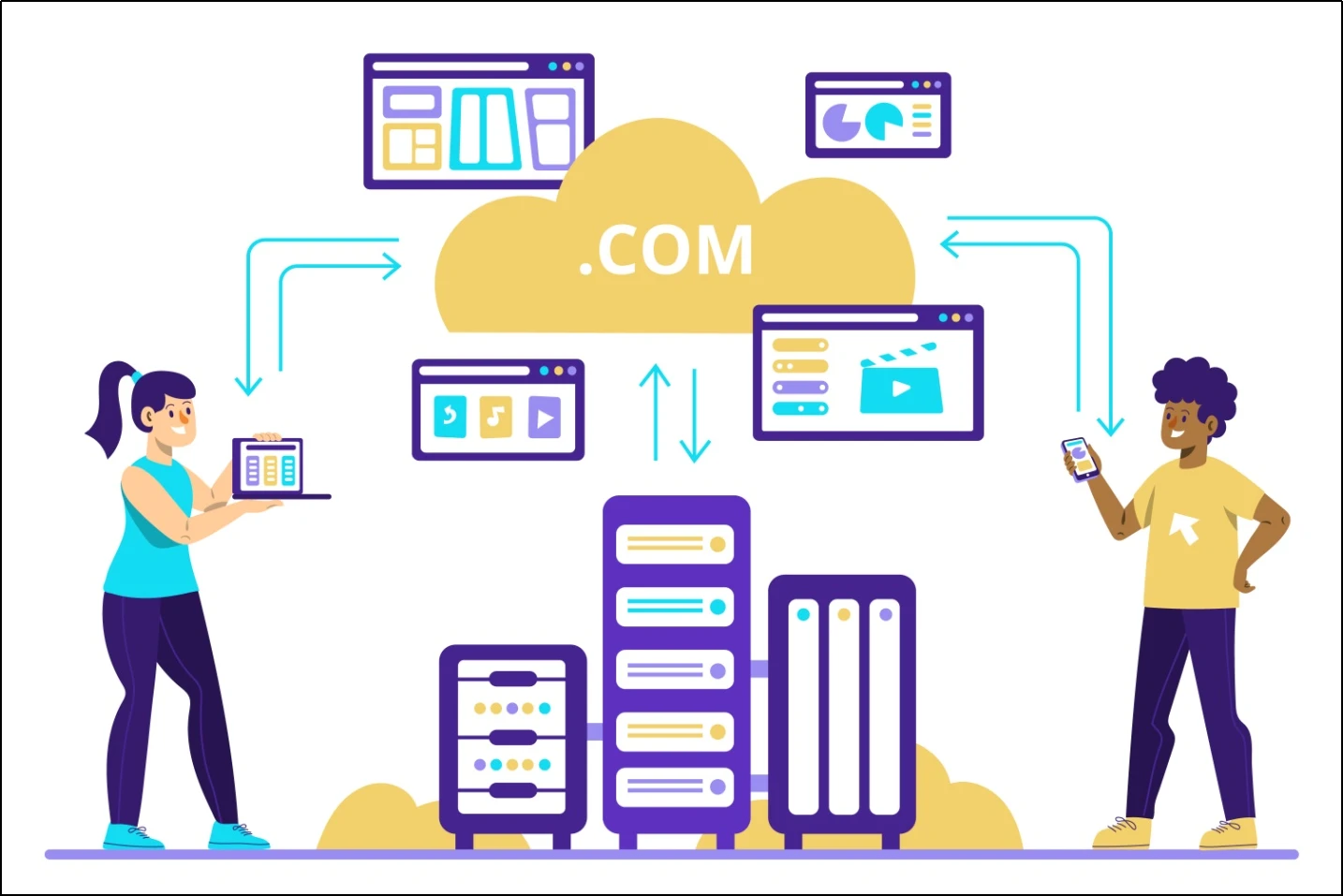
Why Businesses Are Moving from Traditional Hosting to Cloud Platforms
Businesses operating in today’s rapidly evolving digital environment must remain agile, scalable, and cost-efficient to remain relevant and stay profitable. Traditional hosting was once seen as providing reliable hosting solutions; but as performance requirements increase along with security concerns and flexibility requirements for websites and applications, organizations are shifting away from it in favor of cloud platforms; this shift is not just a passing trend – rather, it represents a fundamental transformation in how organizations handle IT infrastructure management and deliver digital experiences.
Scalability without Boundaries
One of the primary drivers behind businesses switching to Cloud Hosting Servers is its scalability. Traditional servers force companies to predict future resource needs and purchase all required hardware upfront – which often leads to over provisioning or performance bottlenecks. Cloud platforms allow businesses to instantly scale resources up or down instantly according to demand – whether its seasonal traffic spikes or rapid expansion, cloud environments provide modern organizations with all of the flexibility required for success.
Cost Efficiency and Pay-As-You-Go Models
Traditional hosting requires considerable upfront investments such as hardware purchases, maintenance, and physical infrastructure costs; cloud computing replaces these upfront investments with operational expenses through pay-as-you-go pricing models that allow businesses to only pay for resources they actually consume – providing more predictable budgeting while decreasing wasted capacity costs.
Companies considering Managed Cloud Hosting Service options also reduce the need for in-house IT teams as providers manage maintenance, updates, and monitoring of systems.
Improved Performance and Reliability
Cloud platforms are constructed on a distributed infrastructure consisting of multiple data centers, providing high availability with minimal downtime. If one server goes offline, workloads can switch automatically between servers so operations remain uninterrupted, whereas traditional hosting environments often rely on single physical servers, making them more vulnerable to outages.
Organizations working with Public Cloud Hosting providers benefit from advanced load balancing techniques, content delivery networks and optimal resource allocation – which all combine to boost website and application speed and performance.
Enhance Security and Compliance
Security concerns are at the core of cloud platforms’ appeal to many businesses, prompting many providers to invest heavily in advanced security measures, such as encryption, firewalls, intrusion detection, and continuous monitoring systems. They also meet global standards and certification requirements that help meet regulatory compliance obligations for their services.
Enterprises that must store sensitive information can leverage private cloud providers in India to provide tailored environments with greater control and customizability – offering higher levels of data protection.
Remote Access and Collaboration
The explosion of remote work has made accessibility an integral factor of IT decisions. Cloud platforms enable teams to securely access systems, applications, and data anywhere with internet connectivity, from anywhere, improving collaboration, productivity, and operational continuity for organizations with distributed teams.
Traditional hosting environments often necessitate complex VPN configurations and on-premises dependencies, which can reduce workflow speed while restricting flexibility.
Faster Deployment and Innovation
Cloud environments enable businesses to rapidly deploy applications and services without waiting for hardware purchase or setup, and development teams can test new ideas, launch products faster, iterate efficiently, and speed to market effectively – vital considerations in industries where innovation drives growth.
Many Cloud Hosting Providers in India provide automated tools, APIs, and DevOps integrations that simplify development processes while decreasing time spent managing infrastructure.
Disaster Recovery and Business Continuity
Data loss or downtime can be devastating for any organization, which is why cloud platforms offer built-in backup and disaster recovery solutions that ensure data is replicated across multiple locations. In case of failures or cyber incidents, systems can be restored quickly with minimal disruption.
Traditional hosting requires costly manual backup strategies and secondary infrastructure that is time-consuming to maintain.
Environmental Sustainability
Cloud computing bolsters environmental sustainability initiatives by optimizing resource usage and decreasing physical hardware needs. Cloud data centers are built for energy efficiency, helping companies reduce their carbon footprint compared to running dedicated servers.
Organizations seeking to meet environmental goals often find cloud platforms an eco-friendlier alternative than traditional hosting models.
Flexibility across Workloads
Modern businesses juggle diverse workloads ranging from web applications and databases, AI tools and analytics platforms, and more. Cloud infrastructure offers support for diverse environments while also seamlessly integrating third-party services. Companies may choose public, private, or hybrid setups depending on their operational needs.
Realcloud solutions demonstrate how businesses can adapt their cloud environments to meet performance, security, and compliance standards while remaining operationally efficient.
Competitive Advantage in a Digital Economy
Migrating to the cloud allows businesses to concentrate more closely on core operations than infrastructure management, increasing agility, faster innovation cycles, and providing improved customer experiences – giving organizations an edge in an increasingly digital marketplace.
As technology develops, businesses that take advantage of cloud platforms will continue to move away from traditional hosting models to cloud solutions as demand for resilience, scalability, and innovation increases. Businesses that opt for these cloud solutions are better prepared to quickly react to market fluctuations while seizing new opportunities with confidence.